TerraBloom: Hands in the Earth, Eyes on the Future
Project name and acronym: TerraBloom
Project number: 2024-3-EL02-KA153-YOU-000268979
Dates: 15-12-2025 & 19-12-2025
Project’s Partners: Greece, Romania, Italy, Czechia, Hungary, Spain

Project's Summary:
TerraBloom: Hands in the Earth, Eyes on the Future is a KA153-YOU mobility project for youth workers carried out under the Erasmus+ programme. The central purpose of the project is to strengthen the capacity of youth workers to understand and apply sustainable agricultural practices as a tool for education, social inclusion, and personal development. The project takes place within a context where young people—especially those from rural areas, disadvantaged backgrounds, or communities with limited opportunities—often lack access to practical learning environments that connect them with nature, food production, and environmentally conscious habits.
The activity plan introduces participants to core elements of cultivating plants, maintaining gardens, understanding soil and water management, and recognising the importance of environmentally responsible food systems. These learning moments are not limited to technical knowledge; they also develop essential interpersonal and organisational abilities. Participants work in groups, take responsibility for tasks, share experiences from their own local contexts, and compare different working methods used across European youth organisations. Collaboration, initiative, critical thinking, and confidence in guiding others become part of the learning process. This combination prepares youth workers to support young people more effectively once they return to their organisations.
A consistent focus of the project is the link between sustainable practices and community engagement. Participants examine how small-scale agricultural activities can create spaces for cooperation, communication, and inclusion. Gardens, planting areas, and shared cultivation spaces are treated as learning environments that support young people emotionally, socially, and practically. Whenever youth workers understand these tools deeply, they can structure activities that help young people feel useful, involved, and capable—qualities that can influence their participation in society and their relationships with others.
The long-term contribution of TerraBloom lies in the knowledge, ideas, and educational practices carried back to each participating organisation. Youth workers leave with increased readiness to design activities related to sustainability, guide young people in projects with real local impact, and encourage healthier attitudes toward the environment and personal responsibility. As a result, TerraBloom strengthens the quality of youth work, supports the development of greener thinking in everyday life, and adds value to the broader effort of building more resilient, cooperative, and environmentally aware communities across Europe.
Activities:
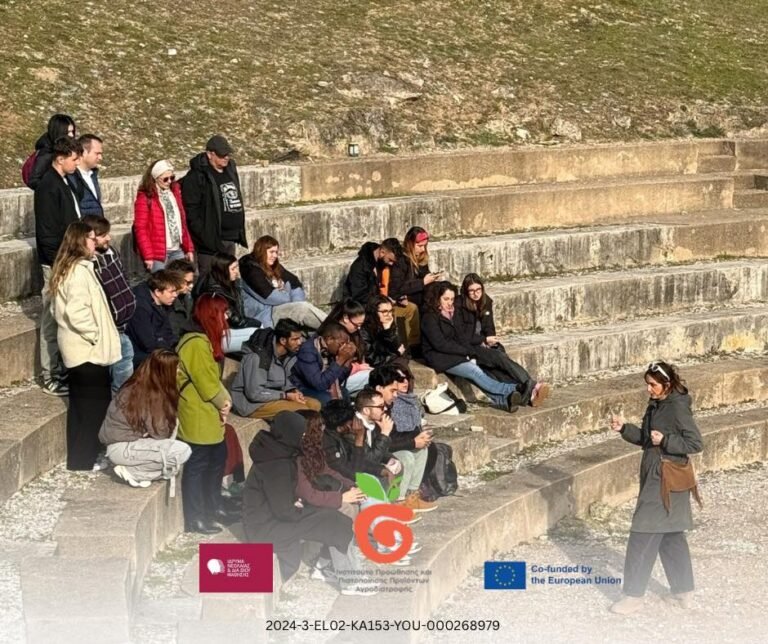
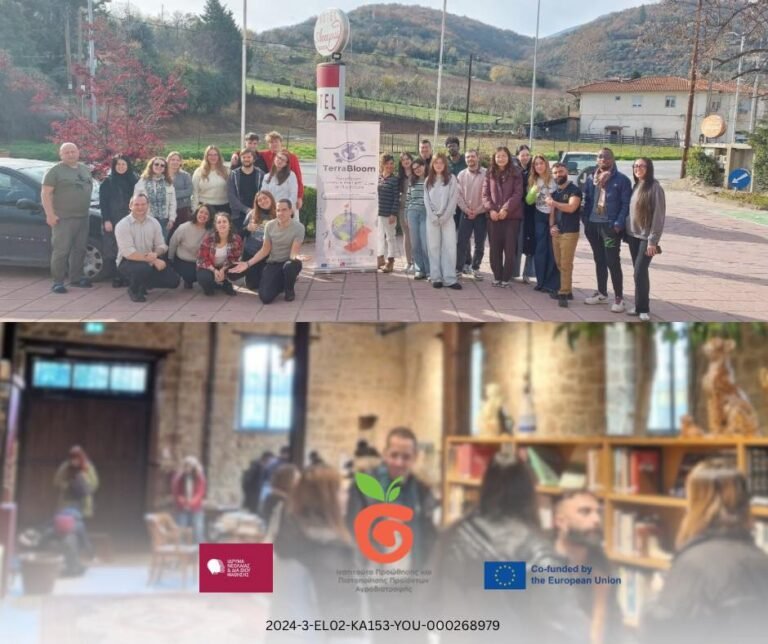
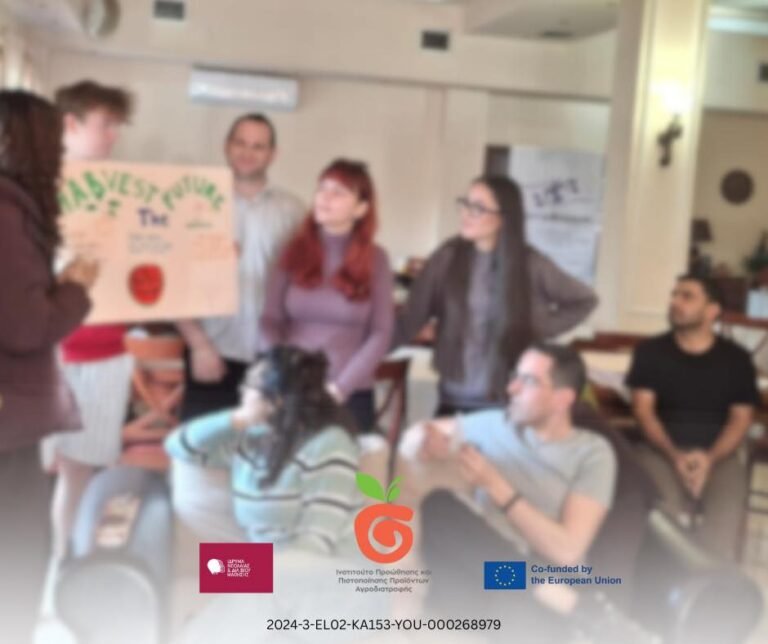
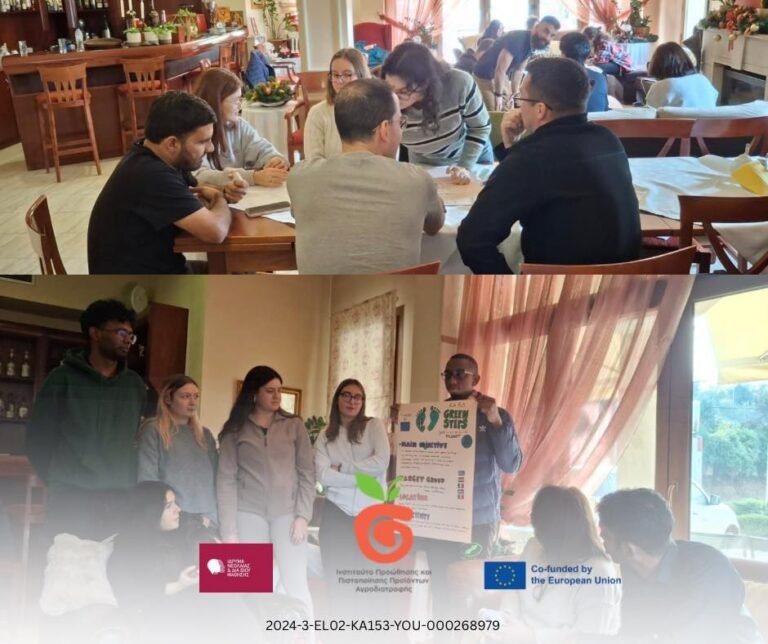
TerraBloom: Hands in the Earth, Eyes on the Future On this specific training day, a combination of adverse weather conditions and the nationwide farmers’ strike made it impossible to carry out the planned hands-on planting activities in the fields. Instead of cancelling the day, we adapted our approach. The focus shifted to the core thematic framework of the TerraBloom project, with an emphasis on planting, sustainable agriculture, and agri-food awareness. Through targeted workshops, group discussions, and experiential learning activities, participants actively developed most of the key Youthpass competences, including learning to learn, teamwork, initiative, and environmental responsibility. A day that proved once again that learning can bloom even when plans change.
Newsletters:
- Newsletter No1: Click Here
- Newsletter No2: Click Here